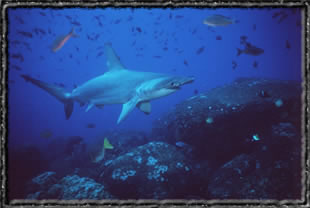
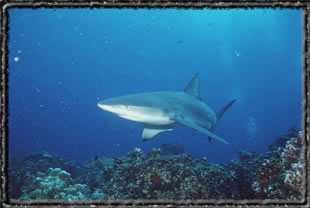
Underwater Galapagos can be as exciting and interesting as Galapagos ashore.
The combination of ocean fishes, birds, mammals and reptiles sets Galapagos
apart from other marine environments, snorkelers and divers share the water
with penguins, sea lions, marine iguanas, sea turtles, angel fish, large
schools of Amberjacks and many other species of fish. The Ecuadorian
crews know where scuba divers can see the best underwater sights, such
as Hammer-Head Sharks.
DIVING SPECS
Island's Climate.
The islands have two seasons. December to April is the hot and rainy season; one should expect occasional short but heavy showers. The sea is generally calm this time of the year and the water temperature warmer. May to November is the "garua" or misty, cooler season. Average temperatures throughout the year range between 21 - 27 Celcius (70 - 81 Fahrenheit).
What to bring.
Guests should bring summer clothing with a jacket or sweater, in a soft bag for easy stowage. Also essential are comfortable walking shoes, thongs, a hat, bathing suit, sun protection lotion, insect repellent and plenty of film. All boats carry basic first aid, but guests should bring a supply of personal medicines.
How to get there.
Passengers fly from the mainland of Ecuador (either Quito or Guayaquil) to Baltra or San Cristobal islands where your yacht will be waiting.
Luggage.
No more than 15 kilos of luggage per person may be checked on board flights to the Galapagos Islands. In addition each passenger is allowed a carry-on flight bag and camera case. Arrangements may be made to leave extra luggage at one's hotel or at our office in Quito.
Galapagos National Park and Municipality Fees.
The entrance fee is US $100.00 and is paid upon arrival in Galapagos or at the Quito and Guayaquil airport. The municipality tax is included. The fee is subject to change without previous notice.
Purchases On Board.
No credit cards are accepted for payment of incidentals on board such as alcoholic beverages, soft drinks, tips, etc. US dollar traveller's cheques, cash US dollars or Ecuadorian Sucres may be used.
Galapagos Naturalist Guide.
We supply a guide who is licensed as a Naturalist Galapagos Guide. He/she is a qualified diver with essential knowledge of specific diving locations with their respective interests and dangers. He/she is not responsible for the safety of the group. He/she briefs the group prior to each dive and participates with the dive master in assisting and controlling the group underwater.
Requirements.
Divers must bring mask, fins and snorkels, wet suit, weight belt, gauges, regulators, buoyancy compensator (a 1/4 inch wet suit is recommended) and underwater flashlight for night dives. Divers must also bring their diving certification card and a recent medical certificate showing that they are fit for diving.
Restrictions.
One must be an experienced diver, Galapagos is not suitable for novice or infrequent divers due to strong currents, sea swells, surges, upwelling, large animals and difficult entry / exit to / from the dive boat. Most dives are drifts along the cliff faces, off-shore rocks and pinnacles. There is no decompression chamber in Galapagos, the closest being in Guayaquil.
Dive Master.
Each group should be accompanied by their own qualified diver who is responsible for the behavior and safety of the group underwater.
Equipment Provided.
Bottles. weights, oxygen and basic medical supplies.
IItinerary.
There will be two dives a day alternating with shore visits to the islands. There can also be some night dives.
Time of year to dive in Galapagos.
We recommend that you plan your trip between November and April or during July and August.